- All 7 scalable business ideas 2026 on this list can be launched for under $20,000 — AI has cut startup costs by up to 80% compared to 2022, per McKinsey’s 2026 AI adoption data.
- Scalable business ideas 2026 that use AI for delivery — like customer support outsourcing and SaaS micro-tools — run at 70–90% gross margins once they are live.
- The single biggest mistake founders make with scalable business ideas in 2026 is skipping validation — spending money before confirming real buyer demand.
- Niche newsletter businesses are the fastest scalable business idea 2026 to revenue — under $500 to launch, first paying subscribers possible within 2 weeks.
- Every scalable business idea on this list has one thing in common: revenue grows without a proportional increase in your working hours. That is the only definition of truly scalable that matters.

Most business advice in 2026 is either too vague or too expensive to act on. This article is neither. Every scalable business idea 2026 listed here has three things: a verified startup cost under $20,000, a real profit margin, and a clear first step you can take this week. The Business Perspective looked at which business models are actually generating revenue in 2026 — not which ones sound good in a podcast. The result is this list of 7 scalable business ideas 2026 that real founders are building right now, with AI cutting costs and growing margins in ways that were impossible three years ago.
What Makes a Business Idea Truly Scalable in 2026?
A scalable business idea 2026 is one where your revenue can grow 10x without your costs or working hours growing at the same rate. That sounds simple. Most businesses do not meet this test.
A freelance consultant who bills by the hour is not scalable. A SaaS tool that charges monthly subscriptions is. A restaurant that needs more staff for every new table is not scalable. A digital course that sells while you sleep is.
In 2026, AI changed the scalability equation for a new category of businesses. Customer support, content creation, data processing, and software building — all of these once required large teams. Now a single founder with the right AI stack can deliver at a scale that required 10 employees in 2022, per McKinsey’s 2026 AI adoption report.
The scalable business ideas 2026 that are working right now all share one structure: a high-value service or product, delivered primarily by software or AI, to a customer who pays repeatedly. That combination — high value, low delivery cost, recurring revenue — is what separates the scalable ideas from the ones that just sound good.
| Business Idea | Startup Cost | Gross Margin | Time to First Revenue | Scalability |
|---|---|---|---|---|
| AI Customer Support Outsourcing | Under $2,000 | 65–75% | 2–4 weeks | Very High |
| Video/Podcast Editing (AI) | Under $3,000 | 60–70% | 1–3 weeks | High |
| Niche Newsletter | Under $500 | 80–90% | 1–2 weeks | Very High |
| SaaS Micro-Tool | Under $5,000 | 75–90% | 4–8 weeks | Extremely High |
| Digital Course / Coaching | Under $3,000 | 70–85% | 2–6 weeks | High |
| AI-Assisted Dropshipping | Under $10,000 | 30–50% | 3–6 weeks | High |
| Local Service + AI Automation | Under $8,000 | 50–65% | 2–4 weeks | Medium-High |
The table above is your starting map. Use it to match your available capital and timeline to the right scalable business idea 2026. Now let us break each one down properly.
7 Scalable Business Ideas 2026 That Actually Make Money
Each scalable business idea 2026 below includes startup cost, profit margin, the specific AI tools that make it work, and your exact first step. No padding. No theory. Just what actually works right now.
AI-Powered Customer Support Outsourcing
Under $2,000 to Start
This is the most in-demand scalable business idea 2026 for anyone with basic communication skills and an understanding of customer experience. Small and mid-sized businesses across e-commerce, SaaS, and local services are desperately looking for affordable customer support that actually works — and most of them cannot justify hiring a full-time team.
You set up AI chatbots using tools like Intercom, Tidio, or Freshdesk AI to handle 70–80% of support tickets automatically. You handle the remaining 20–30% yourself or with a small part-time team. The client pays a flat monthly retainer — typically $1,500 to $5,000 per month — and you deliver better response times than they had before at a fraction of the cost of hiring.
The margin is strong because your delivery cost does not scale with ticket volume after setup. One person with three AI tools can manage customer support for 5–8 clients simultaneously.
According to the US Chamber of Commerce 2026 Small Business Report, 67% of small businesses say customer support is their biggest operational pain point. That is your market — it is massive, it is verified, and it is not going away.
Pick one niche — e-commerce, local clinics, or SaaS startups. Set up a free Tidio account. Create a demo chatbot for a fictional company in that niche. Use the demo as your portfolio. Reach out to 20 businesses in that niche via LinkedIn this week.
Video and Podcast Editing with AI Enhancement
Under $3,000 to Start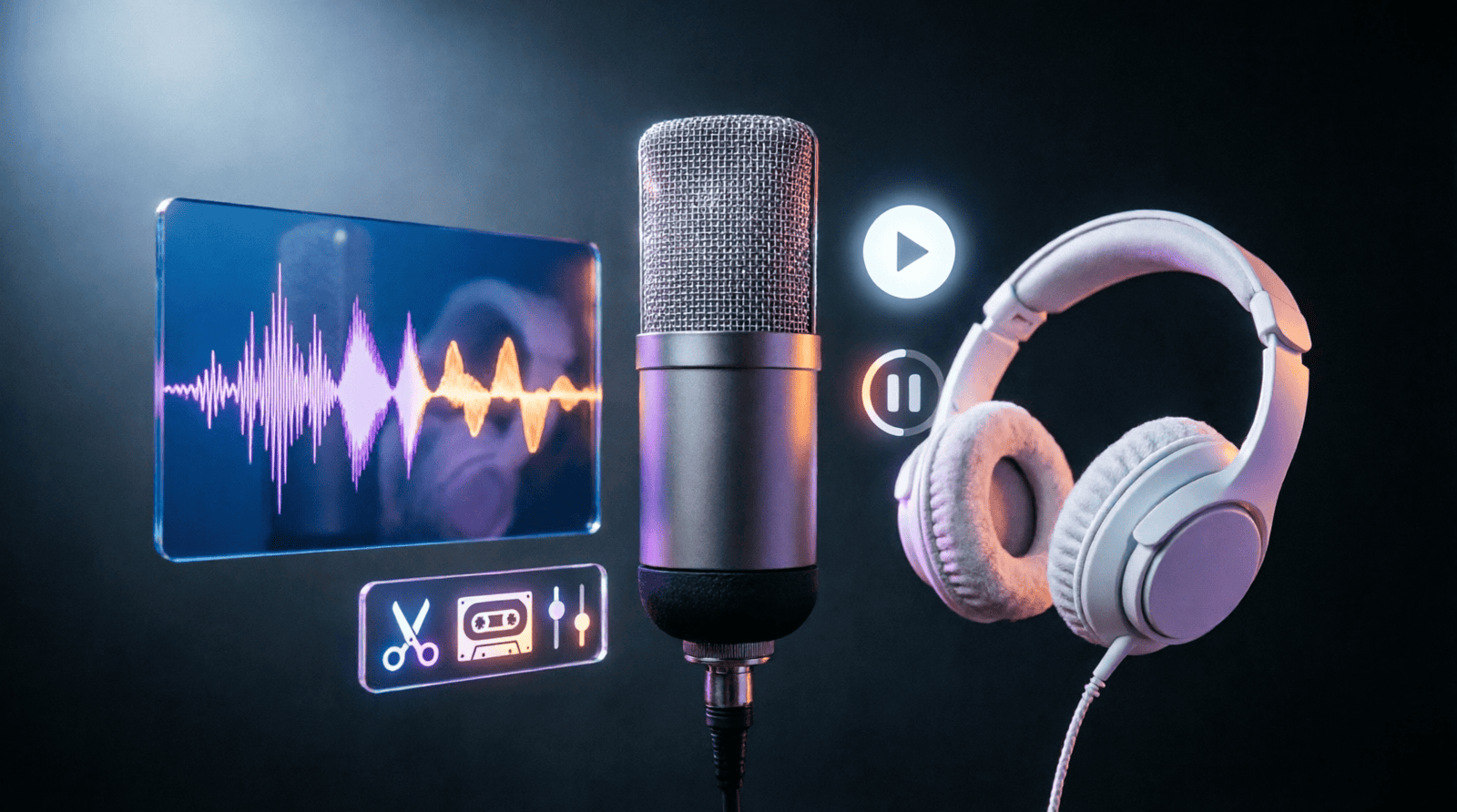
Video and podcast content output has tripled since 2023. Creators, CEOs, consultants, and brands are all producing more content than ever — and almost none of them want to edit it themselves. This scalable business idea 2026 puts you in the middle of that gap.
AI tools like Descript, Adobe Podcast, and CapCut AI have cut video editing time by 60–70%. What used to take a skilled editor 8 hours now takes 2–3 hours with the right AI workflow. You charge clients for the full value of professional editing, not the time it now actually takes you.
The scalable business idea here is building a productised editing service — fixed packages, fixed turnaround times, fixed prices. A YouTube package. A podcast package. A short-form clips package. Clients subscribe monthly. Your cost per delivery drops as you get faster.
One editor using AI tools can deliver for 8–12 regular clients per month. At $800–$2,000 per client per month, that is $6,400 to $24,000 in monthly recurring revenue from one person.
Download Descript’s free tier. Edit a 10-minute video from a YouTube creator you follow — unsolicited. Send it to them with a message explaining what you changed and why. That one edited sample is worth more than any proposal document.
Niche Newsletter Business
Under $500 to Start
A niche newsletter is the lowest-cost scalable business idea 2026 with the highest margin. You need a topic, an audience, and a consistent publishing schedule. That is it. No inventory. No physical delivery. No staff required to start.
The model works in three ways simultaneously. Paid subscriptions ($5–$15 per month per reader). Sponsorships from brands wanting to reach your specific audience ($200–$5,000 per edition depending on list size). And affiliate revenue from recommending products your readers already want to buy.
The niche matters more than the size of your list. A 2,000-subscriber newsletter about CFO tools for fintech startups is worth more per subscriber than a 20,000-subscriber general business newsletter. Specificity is the asset. Beehiiv and Substack make this scalable business idea 2026 accessible even with zero technical background.
According to data from Beehiiv’s 2026 Creator Report, newsletters with over 5,000 subscribers in a defined niche generate an average of $4,200 per month from combined revenue streams. The top 10% earn over $15,000 monthly from newsletters alone.
Pick one niche you know better than most people. Sign up for Beehiiv’s free plan today. Write your first three editions before you launch — having a backlog stops you going blank in week two. Then post your launch announcement in three relevant LinkedIn groups and one Reddit community.
SaaS Micro-Tool Business
Under $5,000 to Start
A SaaS micro-tool solves one very specific problem for one very specific type of customer and charges a monthly fee to do it. Not a full platform. Not an all-in-one suite. One problem, solved elegantly, at a price people will pay without a lengthy procurement process.
Examples that are working right now: a tool that automatically generates LinkedIn posts from voice notes. A tool that extracts action items from Zoom meeting transcripts. A tool that monitors competitor pricing changes and sends a daily digest. All of these can be built with no-code tools like Bubble, Glide, or Softr — plus OpenAI’s API — for under $5,000.
The scalable business idea works because once built, your marginal cost of adding a new subscriber is near zero. Your server costs might go from $50 to $200 per month as you scale from 100 to 1,000 users. Your revenue goes from $1,000 to $10,000. That ratio is what makes SaaS the most scalable business idea 2026 on this list by pure math.
You do not need to be a developer. Lovable, Cursor, and Bolt let non-technical founders build functional SaaS tools in days. The hard part is not building it — it is finding 10 people who will pay for it before you build it. That is the validation step most founders skip.
Write down the most repetitive manual task in a job you have done or currently do. That is your micro-tool idea. Post a description of the problem — not the solution — in a relevant Slack community or LinkedIn group. If 20 people say “I have that problem too,” you have a validated SaaS idea. Then build.
Digital Course or Coaching Business
Under $3,000 to Start
You know something valuable that other people want to learn. That is the entire business model. A digital course is a scalable business idea 2026 because you build the content once and sell it indefinitely — to one student or to ten thousand, the delivery cost is the same.
The global e-learning market is projected to reach $457 billion by 2026, per Global Market Insights. That number sounds abstract until you realise it means millions of people are actively searching for courses on topics you already know well — digital marketing, Excel, language skills, cooking, fitness, accounting, parenting strategies. The market is not saturated. It is growing faster than supply.
Platforms like Teachable, Kajabi, and Gumroad handle payment, delivery, and hosting. Your job is to record the content and market it. AI tools like Synthesia and Descript cut production time by half. A professional-quality 4-hour course can be produced for under $1,500 in 2026.
The scalable upgrade is moving from one-time course sales to a membership model — monthly subscribers who pay for ongoing content, community access, and live coaching calls. That is recurring revenue from the same audience you already built.
Do not build the full course first. Sell it first. Write a one-page description of a course you could teach. Set a launch date 6 weeks out. Offer 10 early bird spots at 50% off. Collect payment via Gumroad before you record a single video. If 10 people pay, you build it. If zero pay, you learned something free.
AI-Assisted Dropshipping Store
Under $10,000 to Start
Dropshipping is not new. But AI-assisted dropshipping in 2026 is a genuinely different scalable business idea from what it was three years ago. The combination of AI product research, AI ad creative generation, and AI customer service has eliminated most of the manual work that made traditional dropshipping unsustainable at small margins.
Tools like AutoDS and Zik Analytics now use AI to identify winning products before they trend. Tools like AdCreative.ai generate Meta and Google ad creatives in minutes. Customer support is handled by the AI chatbot you set up on day one. You are essentially running a product-market-fit testing machine — launching products quickly, cutting the ones that do not convert, scaling the ones that do.
The scalable business idea works because your fulfilment is handled by your supplier. You never touch inventory. Your cost structure is mostly variable — you only spend on ads when you have a product that converts. That means losses stay controlled and wins can be scaled fast.
The margin is lower than other scalable business ideas 2026 on this list — but the revenue ceiling is higher. Successful dropshipping stores regularly generate $50,000 to $150,000 per month in revenue at 30–40% margins, which is $15,000 to $60,000 in monthly gross profit from one store.
Do not pick a product first. Pick a niche audience first — people who buy repeatedly and talk about their purchases online. Pet owners. Home gym enthusiasts. Minimalist travellers. Then use AutoDS to find the top 10 products that niche is already buying. Build your store around the top 3.
Local Service Business with AI Automation
Under $8,000 to Start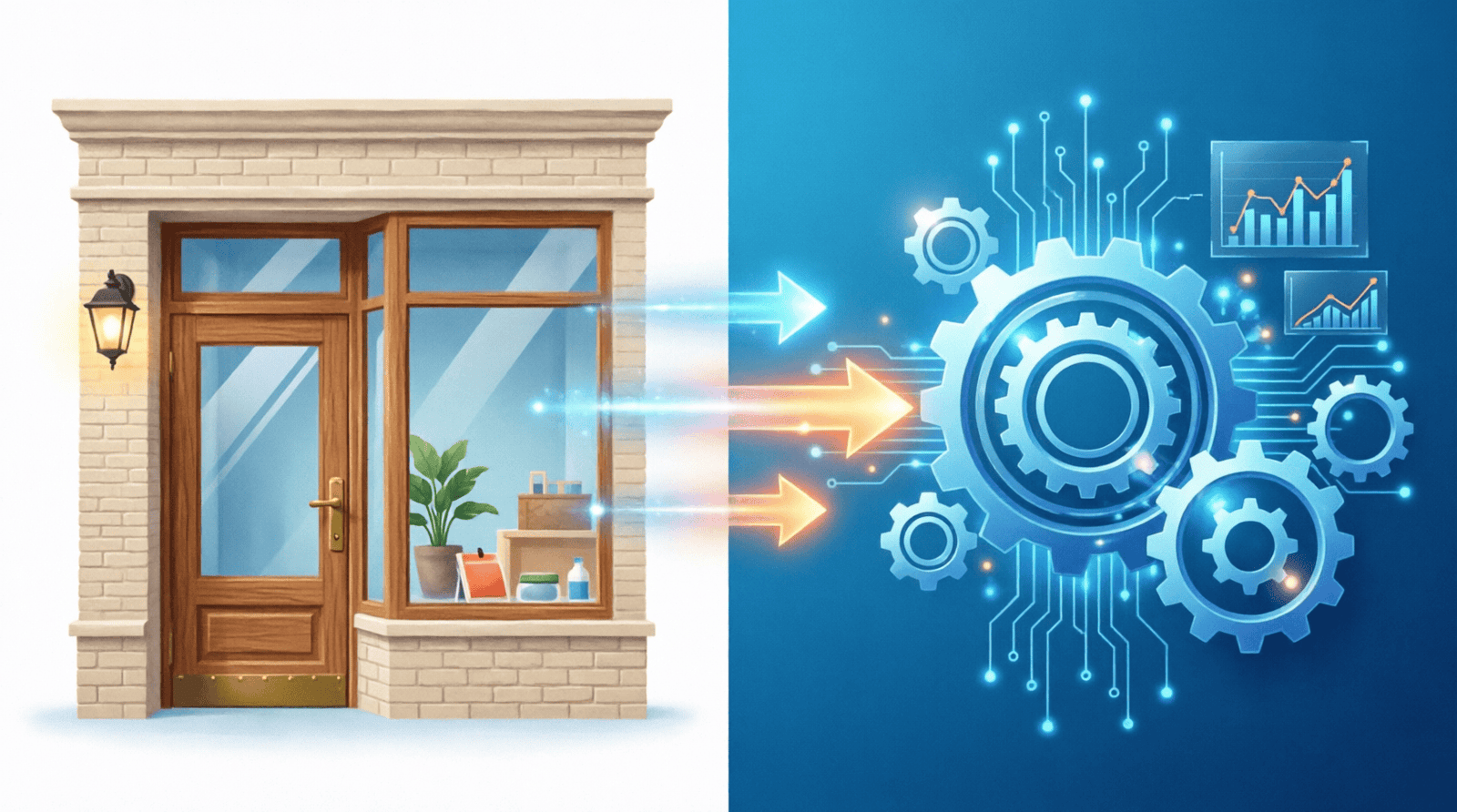
This is the scalable business idea 2026 most people overlook because it sounds old-fashioned. Local service businesses — cleaning, landscaping, home repair, tutoring, pet grooming — are the most recession-resistant businesses that exist. People do not stop needing these services when times get hard.
What is different in 2026 is the AI layer on top. Booking is handled by AI scheduling tools like Calendly AI or HoneyBook. Customer communication is handled by automated WhatsApp or SMS sequences. Reviews are collected automatically. Invoicing and payment are fully automated. A founder running a local cleaning business with 15 regular clients can manage 80% of operations in under 2 hours per week because every repeatable task is automated.
The scalable business idea works by building a system, not a job. You hire contractors who do the physical work. You run the operations, marketing, and customer relationships. As you add more clients, you add more contractors — not more of your own time. The margin grows as your operational systems get tighter.
According to Jobber’s 2026 Home Services Report, local service businesses using automation tools earn 34% more per client than those operating manually. That gap is your competitive advantage if you start with automation built in from day one.
Pick one local service in your city that has strong demand and weak online presence. Search that service on Google Maps. Look at the reviews. If the top 5 results have fewer than 50 Google reviews each, the market has no dominant player. That gap is your entry point. Set up your Google Business Profile this week before spending a rupee on anything else.
Not every expert agrees that scalable business ideas 2026 are as accessible as the AI tool landscape suggests. Some advisors warn that AI has also lowered the barrier for competitors — which means markets for AI-assisted services are filling up faster than they did in 2022. A small number of critics also argue that the 70–90% margin figures for SaaS and newsletters are survivorship bias — most micro-SaaS tools never reach 100 paying subscribers, and most newsletters plateau below 500 readers. The counterargument is equally valid: the cost of failure has never been lower. A niche newsletter that does not grow costs you $500 and a few months of writing. A SaaS micro-tool that flops costs you $5,000. These are experiments worth running, not bets that risk everything.
How to Start a Scalable Business in 2026: 5 Steps That Work
Every scalable business idea 2026 on this list follows the same launch sequence. Skip any of these steps and you will either waste money or waste months. Follow all five and you can have a paying customer within 30 days.
Pick Your Scalable Business Idea Based on What You Already Know
Do not pick an idea because it sounds profitable. Pick one because you already understand the customer and the problem. Your existing knowledge is your unfair advantage — it cuts months off your learning curve and makes your first clients trust you faster.
Validate Before You Spend a Single Rupee
Post your offer in three relevant online communities. Message 20 potential clients directly. If 10 people express genuine interest in 72 hours, demand is real. If zero respond, the problem is either your positioning or your audience — not your idea. Pivot fast and free.
Launch with the Minimum Viable Operation
A landing page, a payment link, and one AI tool. That is all you need in week one. Do not spend months building the perfect system before you have a paying customer. A working business with rough edges beats a perfect system with zero clients every single time.
Get 3 Paying Customers Before Running Any Ads
Reach out directly to 50 potential clients via email or LinkedIn. Offer a pilot at a reduced rate. Three paying clients at any price proves the model works. Once it works, raise your price. Once the price works, run paid ads. This sequence saves founders thousands in wasted ad spend.
Document and Automate Before You Hire
Write down every step of how you deliver your service — every email, every tool, every action. Then identify which steps AI can handle. Automate those first. Only hire or scale paid acquisition after you have a documented, partially-automated system. Otherwise you hire people to do chaos, not process.
For context on how scalable businesses attract venture capital once they prove their model, read: How to Raise Seed Funding for Startups. If you are deciding between bootstrapping and taking investment: Angel Investors vs Venture Capital — What Founders Need to Know. And to understand how investor-ready your scalable business idea is: How to Value a Startup in 2026.
For startup funding stories and founder journeys from around the world, The Business Perspective recommends: Rise of Startups — Global Startup Stories. For the technology trends driving these scalable business models: IoT Insights Hub — AI and Emerging Technology News.
Frequently Asked Questions About Scalable Business Ideas 2026
What are the best scalable business ideas in 2026?
The best scalable business ideas 2026 include AI-powered customer support outsourcing, video and podcast editing with AI tools, niche newsletter businesses, SaaS micro-tools, digital course creation, AI-assisted dropshipping, and local service businesses with automation built in. All 7 can be started for under $20,000 and grow without proportional increases in cost or working hours.
Which scalable business ideas 2026 need the least startup capital?
The scalable business ideas 2026 with the lowest entry cost are niche newsletters (under $500), AI customer support outsourcing (under $2,000), and video/podcast editing services (under $3,000 including equipment). All three can generate first revenue within 2 weeks of launch without paid advertising.
Can I start a scalable business in 2026 with $20,000?
Yes. Every scalable business idea 2026 on this list can be launched with $20,000 or less. AI tools have cut the startup cost of content, customer support, and software businesses by 60–80% compared to 2022, per McKinsey’s 2026 AI adoption data. The barrier to entry for high-margin, low-cost business models has genuinely never been lower.
Which scalable business ideas 2026 have the highest profit margins?
SaaS micro-tools and niche newsletters have the highest profit margins among scalable business ideas 2026 — typically 75–90% gross margin once operating. AI customer support outsourcing and digital courses also run at 65–85% margins because delivery cost does not scale with revenue after the initial setup is complete.
How do I choose the right scalable business idea for 2026?
Choose a scalable business idea 2026 that matches three things simultaneously: a skill or knowledge you already have, a market with verified buyer demand, and a delivery model where revenue grows without proportional increases in your time. The best scalable businesses in 2026 use AI to automate delivery so the founder is not the bottleneck at every stage of growth.