⚡ Key Takeaways
- Forbes 2026 added 45 new AI billionaires 2026 in one year — 86 total, worth a combined $2.9 trillion.
- Bloomberg confirmed 19 new AI billionaires 2026 worth $59.3 billion from the latest startup wave alone.
- Wave 2 AI billionaires 2026 are not chip makers — they apply AI to law, healthcare, customer service, and software.
- Edwin Chen of Surge AI leads new entrants at $18 billion. Cerebras IPO instantly minted two more AI billionaires 2026.
- There are now 498 AI unicorns globally worth $2.7 trillion — 100 founded since 2023.

Forty-five people became AI billionaires 2026 in a single year. Not over a decade. Not across a generation. In twelve months, the Forbes 2026 Billionaires List added 45 names whose fortunes trace directly to artificial intelligence companies, infrastructure, and investment.
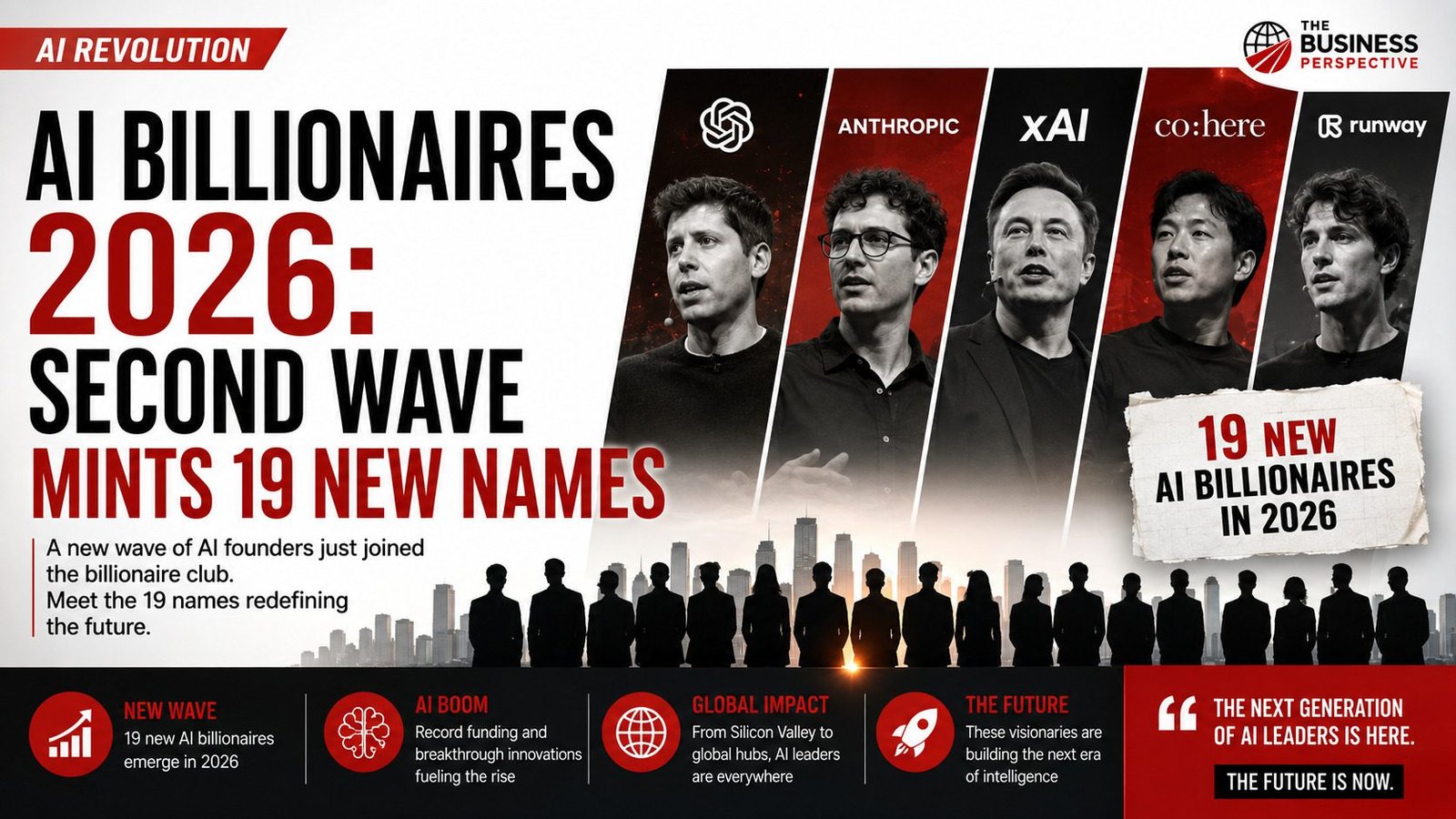
Bloomberg then confirmed a separate cohort — 19 new AI billionaires 2026 worth a combined $59.3 billion, minted from the latest startup wave.
But here is what makes the 2026 class remarkable: these are not Jensen Huang building chips or Sam Altman building language models. The new AI billionaires 2026 include a poet, a felon, three college dropouts, and a doctor building a search tool for hospitals.
The second wave of AI wealth has arrived — and it looks nothing like the first.
How Many New AI Billionaires Were Created in 2026?
Forbes’ 2026 Billionaires List added 45 new AI billionaires 2026 in one year. Total AI billionaires 2026 globally now stand at 86, with combined wealth of $2.9 trillion — larger than the GDP of the United Kingdom.
Bloomberg’s separate analysis identified 19 of the newest AI billionaires 2026 worth $59.3 billion collectively. That is a staggering number to absorb: 19 people, one year, $59 billion in new wealth.
86
Total AI Billionaires 2026 (Forbes)
$2.9T
Combined Wealth of AI Billionaires 2026
498
AI Unicorns Worldwide (CB Insights 2026)
According to CB Insights, there are now 498 AI unicorns — private companies valued at $1 billion or more — with a combined value of $2.7 trillion. Of those, 100 were founded after 2023.
The wealth creation pace among AI billionaires 2026 is not slowing. It is accelerating. The Business Perspective has tracked this trajectory closely — from the Anthropic IPO valuation story to Lovable AI hitting a $13.3B valuation. The pattern is consistent.
Wave 1 vs Wave 2: What Changed for AI Billionaires 2026?
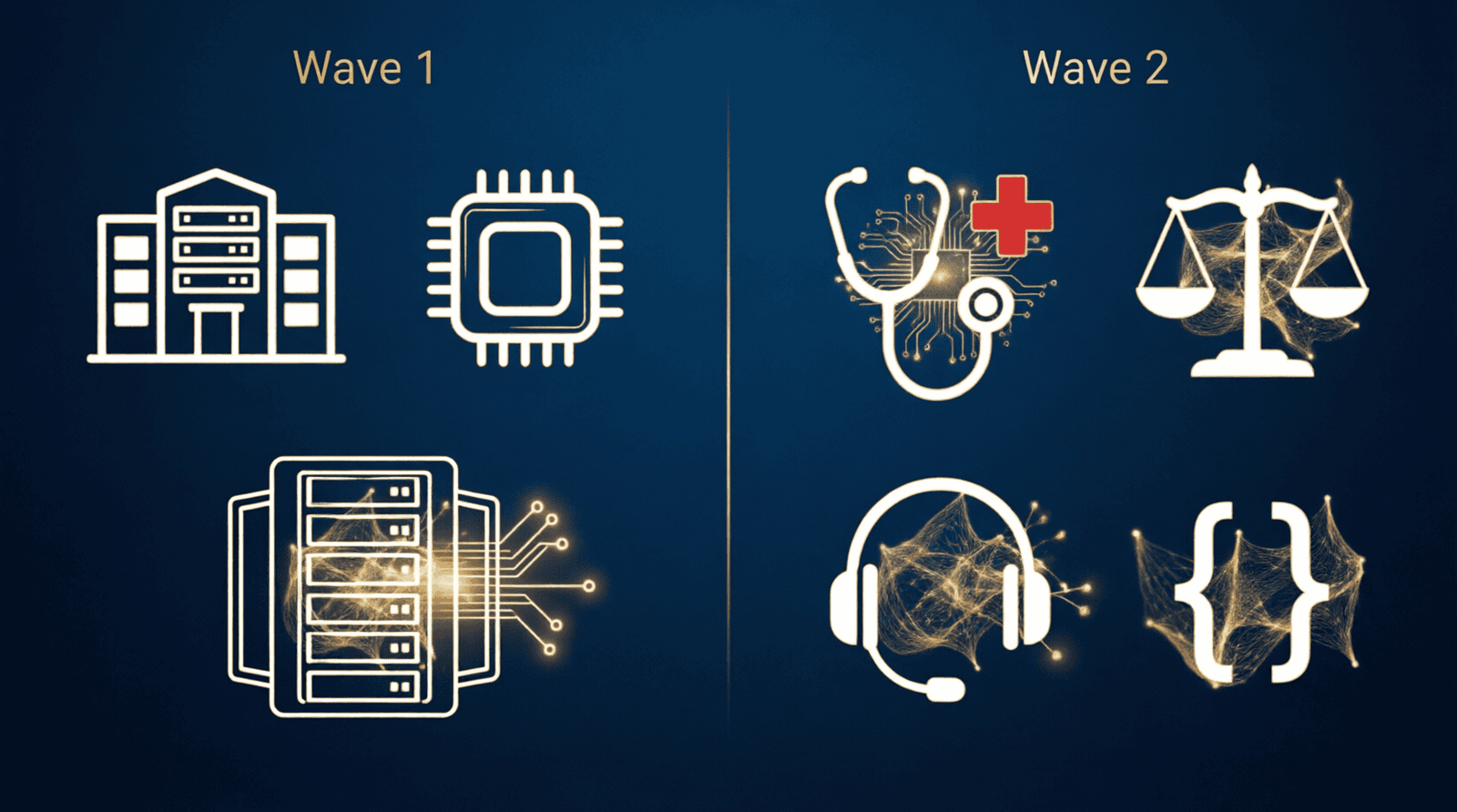
Wave 1 AI billionaires built wealth on chips, data centers, and large language models. Wave 2 AI billionaires 2026 are fundamentally different. These founders apply existing AI to legacy industries — and win faster with less capital.
| Factor | Wave 1 (2020–2024) | Wave 2 AI Billionaires 2026 |
|---|
| Core Business | Chips, data centers, LLM development | AI applied to law, healthcare, software, finance |
| Key Names | Jensen Huang, Sam Altman, Dario Amodei | Edwin Chen, Daniel Nadler, Cursor founders |
| Time to $1B | 5–10 years | 2–4 years |
| Capital Required | $10B+ infrastructure investment | $50M–$500M Series A/B rounds |
| Founder Profile | PhD researchers, hardware engineers | Dropouts, poets, lawyers, doctors |
| Revenue Model | API access, chip sales, cloud contracts | SaaS subscriptions, vertical enterprise deals |
| Risk Profile | Massive capex, uncertain unit economics | Faster product-market fit, lower burn |

The new class of AI billionaires 2026 looks nothing like Silicon Valley’s old guard.
Who Are the New AI Billionaires 2026?
The 19 new AI billionaires 2026 identified by Bloomberg and the 45 flagged by Forbes span a wide range of backgrounds, industries, and business models. Here are the most notable names from this year’s class.
Edwin Chen
Founder, Surge AI
$18 Billion
Surge AI labels training data for machine learning models. Chen is the richest newcomer among AI billionaires 2026. He says data labelling is “the grunt work that makes AGI possible.”
Liu Debing
Co-Founder, Z.ai
$9.1 Billion
Chinese AI model company Z.ai listed on the Hong Kong stock exchange in January 2026. Liu proves that AI billionaires 2026 are no longer a Silicon Valley-only story.
Daniel Nadler
Founder, OpenEvidence
$7.6 Billion
Built an AI-powered search tool specifically for physicians. OpenEvidence is a textbook AI billionaires 2026 application layer play — premium enterprise pricing in a legacy industry.
Cerebras Executives
Cerebras Systems IPO 2026
$5.55B IPO
Cerebras’ 2026 IPO — the largest of the year — instantly minted two new AI billionaires 2026 from its executive team. The company raised $5.55B in proceeds per Bloomberg.
Other notable AI billionaires 2026 include the co-founders of Cursor (AI coding assistant), Lovable (vibe coding platform), Sierra (AI customer service), Cognition (AI software engineer), and Harness (AI DevOps).
Ten of Bloomberg’s 19 new names built vibe-coding or AI application software businesses. The message is clear: you do not need to build a foundation model to join the AI billionaires 2026 class.
“Going back over 100 years of data, we have never seen wealth created at this size and speed. It’s unprecedented.”
— Andrew McAfee, Principal Researcher, MITWhich Industries Are Creating AI Billionaires 2026?
The second wave of AI billionaires 2026 is concentrated in four sectors — each representing a legacy industry being restructured by AI from the inside.
Healthcare AI
Daniel Nadler’s OpenEvidence is the headline AI billionaires 2026 healthcare example. AI search tools for physicians, diagnostic assistants, and clinical workflow automation are producing the first healthcare-native billionaires.
Per CB Insights, healthcare AI startups raised over $11B in 2025 alone. The category is just beginning.
Legal AI
Law firms are contracting out document review, due diligence, and contract analysis to AI platforms. Several 2026 Forbes newcomers built legal AI companies charging premium subscription rates to large law firms — a high-margin, low-churn model that prints consistent revenue.
AI Coding Assistants
Cursor surpassed $9B in valuation in 2026 after explosive adoption among professional developers.
Lovable — covered by The Business Perspective — hit a $13.3B valuation within months of launch. The vibe coding category alone produced more than 10 of Bloomberg’s 19 new AI billionaires 2026.
Data Labelling Infrastructure
Scale AI and Surge AI sit underneath every major AI model in existence. Alexandr Wang became the world’s youngest self-made billionaire at 24. Lucy Guo became the youngest self-made woman billionaire at 30.
Edwin Chen’s Surge AI reinforces the pattern: unglamorous data infrastructure creates durable, compounding AI billionaires 2026 wealth.
Wave 1 built the infrastructure. AI billionaires 2026 Wave 2 builds on top of it — faster and with less capital.
Is AI Wealth Creation Faster Than the Dot-Com Era?
Yes — and it is not close. A brother and sister who started a company five years ago are now each worth $11 billion, per Bloomberg’s analysis of AI billionaires 2026. That pace beats the dot-com boom, the smartphone era, and the social media land grab of the 2010s.
The wealth of the 1,500 highest-paid CEOs increased 54% between 2019 and 2025, per CNBC data. The Forbes 2026 World’s Billionaires List recorded 3,428 billionaires with combined wealth of $20.1 trillion — up $4 trillion from 2025 in one year.
AI has compressed decades of value creation into months. Software-based AI products scale with near-zero marginal cost once built. A legal AI platform serving 500 firms costs nearly the same to run as one serving 5 firms.
That economic structure — infinite scalability, minimal marginal cost — did not exist in the dot-com era at this scale. It is the core engine driving the AI billionaires 2026 phenomenon.
For founders tracking this, Rise of Startups has a sharp breakdown on how startups scale from garage to global unicorn — covering the exact inflection points that separate companies that plateau from those that mint billionaires.
What Some Experts Say Differently About AI Billionaires 2026
⚠️ The Counterargument
Not everyone agrees the second wave is built to last. Felix Wang, analyst at research firm Hedgeye, expects a shakeout in AI infrastructure, which requires enormous ongoing investment.
Some analysts warn that private market valuations at OpenAI, Anthropic, and others have outpaced revenue growth — raising questions about capital allocation and correction risk. Elon Musk’s net worth has already moved above and below the trillion-dollar mark multiple times since June 2026, a sign of the volatility embedded in AI-linked valuations.
The dot-com parallel is uncomfortable: the Nasdaq fell 78% between 2000 and 2002 after a similar explosion of paper wealth. Whether AI billionaires 2026 application companies can sustain their valuations through a market correction remains the defining question of 2027.
What AI Billionaires 2026 Mean for Founders and Investors
The AI billionaires 2026 data sends three clear signals for anyone building or funding a company today.
1. The Application Layer Is Wide Open
Wave 1 required $10B in compute. Wave 2 AI billionaires 2026 required a sharp domain insight and the willingness to build fast.
Vertical AI — applied to one specific industry’s workflow — is the fastest path to a unicorn valuation right now. Law, healthcare, finance, construction, and logistics have barely been touched.
2. Unconventional Founders Are Winning
At least three of Bloomberg’s 19 new AI billionaires 2026 have no college degree. One pleaded guilty to a felony. One is a published poet.
The pattern is clear: deep domain expertise in a target industry matters more than a computer science credential. If you understand a problem that industry insiders live with daily, you can build the AI tool that fixes it — and join the AI billionaires 2026 class doing it.
3. Data Infrastructure Is Still Undervalued
Edwin Chen built an $18B business labelling data. That is less glamorous than building GPT-5, but the economics are more durable. Every AI model needs labelled data. As model count grows, demand compounds. Investors who see this early are positioning for the next wave of AI billionaires 2026 wealth creation.
For practical frameworks on raising capital in this environment, see Rise of Startups’ guide on 10 secrets VCs won’t tell you about raising funding and their breakdown of how startup investors spot high-growth companies.
The Business Perspective has covered the mechanics of startup valuation in depth. If you are raising capital in the AI space now, understanding how investors value startups and the difference between SAFE notes vs convertible notes is non-negotiable.
Frequently Asked Questions on AI Billionaires 2026
How many new AI billionaires were created in 2026?
Forbes’ 2026 Billionaires List added 45 new AI billionaires 2026 in a single year. Bloomberg separately identified 19 new names from the latest wave worth a combined $59.3 billion. Total AI billionaires 2026 now stand at 86 globally.
Who are the new AI billionaires in 2026?
The top new AI billionaires 2026 include Edwin Chen of Surge AI ($18B), Liu Debing of Z.ai ($9.1B), Daniel Nadler of OpenEvidence ($7.6B), Cerebras Systems executives, and founders of Cursor, Lovable, Sierra, Harness, and Cognition.
How much wealth have AI billionaires 2026 created?
The combined wealth of 86 AI billionaires 2026 is estimated at $2.9 trillion per Forbes. This is larger than the GDP of the United Kingdom. The Forbes 2026 World’s Billionaires List overall recorded $20.1 trillion in combined wealth — up $4 trillion from 2025.
What industries are the new AI billionaires 2026 from?
Unlike Wave 1, AI billionaires 2026 from Wave 2 are applying AI to law, healthcare, customer service, software development, and data labelling — the AI application layer. This requires less capital but produces faster product-market fit and more predictable revenue.
Is the AI billionaire boom faster than the dot-com era?
Yes. MIT’s Andrew McAfee states we have never seen wealth created at this size and speed in over 100 years of data. AI billionaires 2026 have compressed decades of value creation into months — faster than dot-com, smartphones, and social media combined.
How many AI unicorns exist in 2026?
There are 498 AI unicorns in 2026 with a combined valuation of $2.7 trillion, per CB Insights. Of those, 100 were founded since 2023. More than 1,300 AI startups are valued above $100 million — the pipeline feeding future AI billionaires 2026 is enormous.
The Bottom Line on AI Billionaires 2026
The AI billionaires 2026 story is no longer about Nvidia or OpenAI. The second wave has arrived — and it is being built by domain experts, unconventional founders, and data infrastructure operators who spotted the real opportunity: not building the AI, but using it better than anyone else in a specific industry.
45 new AI billionaires 2026 in one year. $2.9 trillion in combined wealth. 498 unicorns and counting. The wave is not cresting — it is still building.
The question for every founder and investor reading this is simple: which industry do you know better than anyone else? That knowledge is now a billion-dollar asset. Follow The Business Perspective for daily coverage of global business, AI, and startup funding news.